Is Googling enough? Should we only write about our own lives and things we know personally?
This was the question posed during a Zoom writing group I recently attended. To give you some context, a writer stated that he didn’t want to write about himself. A non-cop, he’d submitted a police procedural for review, and members were struggling to relate to his characters. Most had believability issues with his plot. Though they encouraged him to write about his own very colorful life, I was on the fence about their advice. He said that though his immigrant succeeding in America life might seem interesting to others, it didn’t inspire him creatively.
I am a firm believer in writing about what stirs and motivates you. But what if the very thing that gets you excited involves a place you’ve never visited let alone lived in, or a job you’ve never done? The non-cop writing group member said he used Google to research police tactics and procedures, but clearly something was missing with respect to his story. This got me thinking…in today’s post pandemic world of computer-search research should we focus our stories solely on familiar people, places and things?
After writing group, I thought about a successful novelist who seemed to do the opposite of this– Arthur Golden, the author of Memoirs of a Geisha. When his award-winning novel about a Japanese girl training to be a geisha during World War 2 came out in 1997, Golden, an American father and professor from Tennessee, was forty-two years old. The novel is written in first person point of view. This middle-aged American man’s ability to inhabit the mind of a young Japanese girl who lived forty years before his time, has always impressed me. I thought, if Golden could accurately depict a world completely foreign from his own, my writing group friend could do it too. After all, Golden had accomplished this feat without the aid of Google. Google came out in 1998. I was about to email my thoughts to my friend, but then I did some Google research of my own.
I discovered that Golden had lived in Japan for two years prior to writing his novel, that he had a Master’s degree in Japanese history, that he’d interviewed former geishas and countless other relevant sources, and that it took him six years to research, write, and edit his novel. It occurred to me that the life of a Japanese geisha was not completely foreign to Golden after all. So where did this leave my writing group friend? What advice could I offer him? Should I encourage him to keep working on the police procedural that excited him, or should he attempt to write something closer to home?
Though I write thrillers and murder mysteries, I’ve never personally seen a dead body or even held a gun. I write magic realism too, and I’ve never intentionally spoken to a practicing witch. But I do try to do as much computer research as possible and if a beta reader tells me that an aspect of my plot isn’t believable to them, I fix the glitch that pulls them out of my story. I also, scatter details from my own life into my novels which I believe grounds my work and makes it feel more real. My characters often have jobs I’m familiar with, they deal with kid drama like me, the live in places where I’ve lived, and they visit dog parks. I’m a dog lover. In other words, I mix in the known with the unknown. And this, along with research, seems to work for me. But every writer is different.
A couple of months ago I attended a talk given by a writer who’d written a mystery novel set in a city she’d never been to, New Orleans. She spoke about interviewing a friend who lived in the French Quarter who gave her a sense of what the city was like, she watched films set there, and she looked at photos and maps of the parishes. The writer felt doing all this, was enough to give her a grasp of the city, its people, and its vibe. I read her novel, and it was a pretty good. But could it have been better if she’d actually lived in New Orleans or at least visited? Should she have set her mystery in a more familiar place?
For me, writing about the unknown boils down to two things. Number one, does your passion fuel you enough to do the hard research needed to make an unfamiliar, place, job, or lifestyle come alive on the page? Number two, how vivid is your imagination? Can you truly get inside of the head of someone who jumps out of airplane if you’ve got a fear of flying? If your straight, can you honestly understand what it’s like to be a lesbian, not just the basics, but the daily nuances of it all. If the answer to both these questions is a resounding, “yes,” then I say go for it. Still, one question looks largely in my mind. Are there parts of your story that you might overlook simply because you’ve lived a different life, details that might take the story down another truer path?
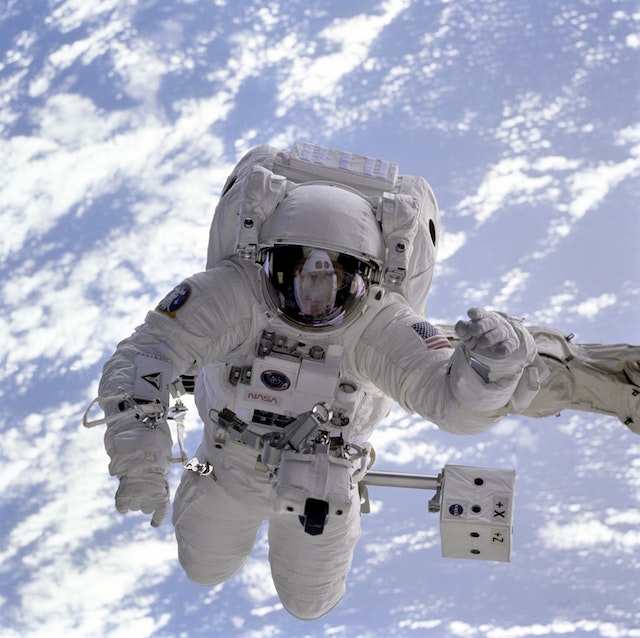
I was watching The Talk while I was on the treadmill at my gym, and one of the hosts mention that Tom Cruise planned to go to the Space Station to research his next film. The host, Natalie Morales, asked the other hosts if they thought Tom Cruise should go into space for his art. The responses of the panel were mixed, just like the reactions to the question posed at my writing group– Should you write about things you’re not familiar with?
After watching The Talk segment, I opted not to email my writing group friend. I’ve decided to support whatever project he chooses to focus on. We can’t all go to the Space Station. We can’t all be Tom Cruise. As writers, not A-list movie stars, our lives are often restricted by financial situations and family and job responsibilities. The reality is, most of us have to rely on Google to some extent. But if we’re driven by passion and we work hard, we can write about walking on the moon and make the experience believable to our readers. You never know. Some of us, might be even be able to write a convincing story about the Space Station that rivals Tom’s next film. After all, Andy Weir, the author of The Martian, didn’t traveled to Mars.